Printed Batteries
Powering electronics with flexible printed batteries
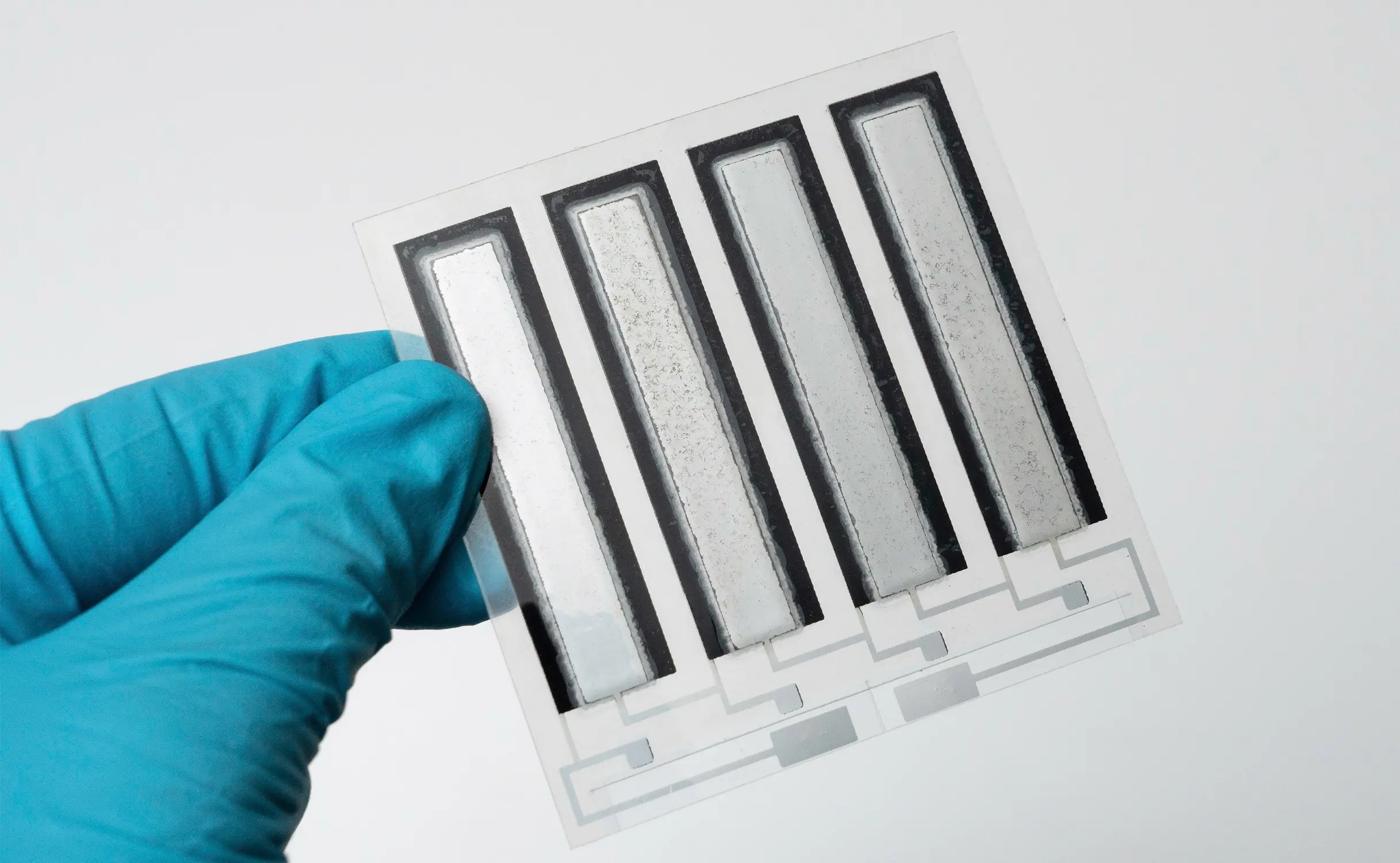
Printed Batteries
Powering electronics with flexible printed batteries
Printed batteries are energy storage devices fabricated using various printing technologies. The process typically involves dispensing conductive inks, electrolyte paste, and separator material onto thin, lightweight substrates.
In flexible electronics, printed batteries serve a critical role because of their ability to integrate seamlessly into designs with flexible forms and shapes. This adaptability allows customization based on specific material and energy requirements.

APPLICABLE INDUSTRIES
- Consumer electronics
- Medical equipment
- Automotive
- Aerospace
COMMON MATERIALS
- Current collector: Stainless steel, silver, carbon, aluminum, copper, nickel, gold
- Anode: Zinc, silver, carbon, lithium, nickel
- Electrolyte: BMIMTf/PVDF–HFP/ZnTf, H2O/KOH/ZnO, EC:DMC/LiPF6
- Cathode: MnO2, silver, LiCoO2, LiFePO4
COMMON SUBSTRATES
- Polyethylene terephthalate (PET)
- Polyethylene naphthalate (PEN)
- Polyamide (PI)
- Nylon
- Paper
- Fabric
INDUSTRY
INDUSTRY
FUTURE OUTLOOK
FAST FACTS