Flexible Membrane Switches
Enable flexible human machine interfaces with flexible membrane switches.
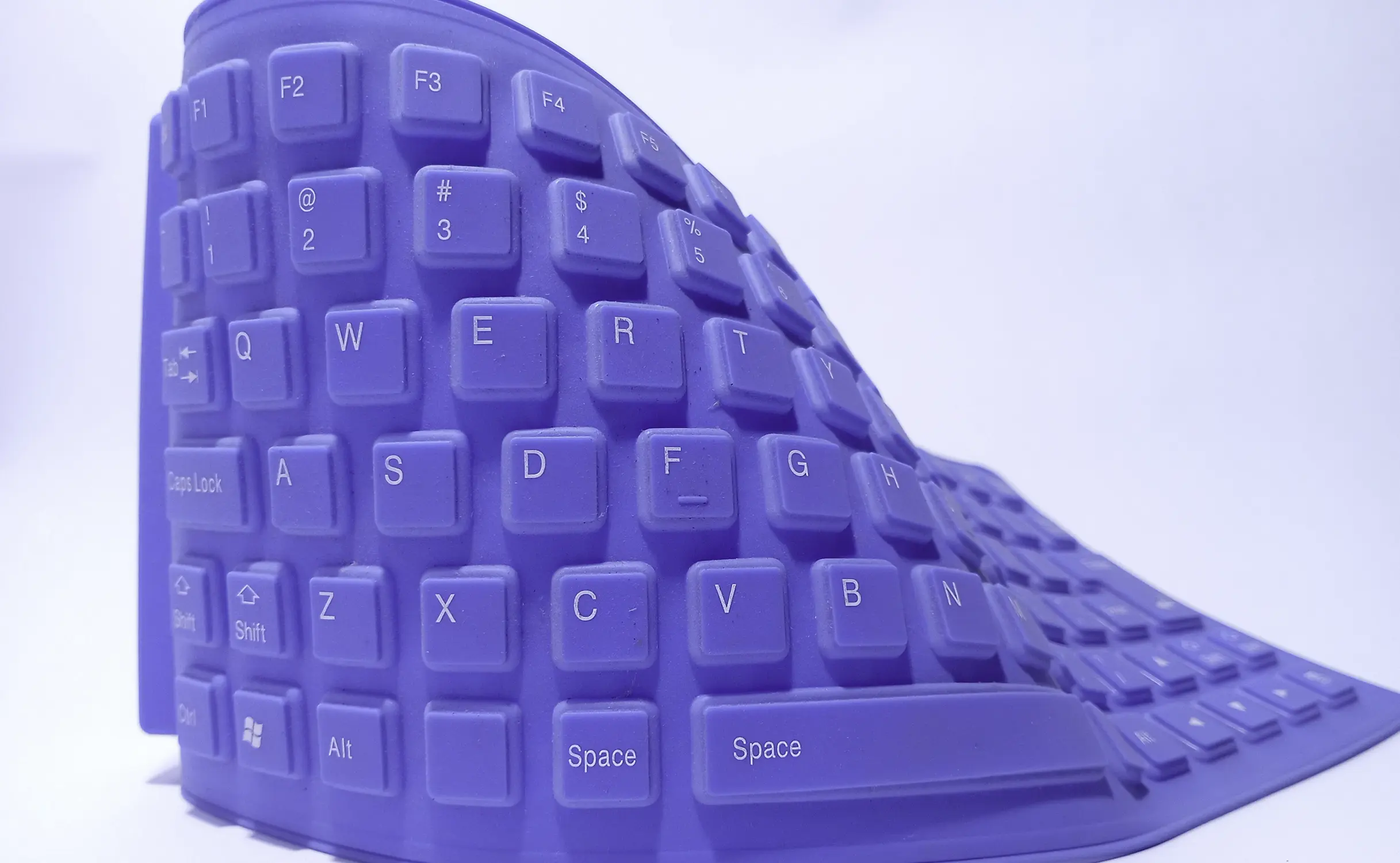
Flexible Membrane Switches
Enable flexible human machine interfaces with flexible membrane switches.
In flexible electronics, a flexible membrane switch consists of a flexible substrate that houses all the functional components and a graphic overlay that acts as a user interface. Together, they allow for the customization of control panels, meeting both aesthetic and functional requirements.
Common substrates like polyethylene terephthalate (PET) are effective in human machine interface (HMI) applications, including household appliances like dishwashers, washing machines, and treadmills. Recent advances in material science have introduced more eco-friendly materials, leading us toward a more sustainable future.

APPLICABLE INDUSTRIES
- Consumer electronics
- Healthcare
- Home appliances
- Automotive
- Aerospace
COMMON MATERIALS
- Silver-based inks
- Copper-based inks
- Carbon-based inks
- Dielectric inks
COMMON SUBSTRATES
- Biaxially oriented polyethylene terephthalate (BOPET)
- Polycarbonate (PC)
INDUSTRY
INDUSTRY
FUTURE OUTLOOK
FAST FACTS
Frequently asked questions
The required degrees of freedom (DOF) depend on the application. Simple grasping tasks can be achieved with as few as 3-5 DOF, while more dexterous, human-like motion typically requires up to 23 DOF to independently control each finger joint. In this project, a reduced number of DOF was sufficient to demonstrate grasping and mirroring hand movement, striking a balance between mechanical complexity and educational value.
Robotic hands commonly use sensors such as strain gauges, flex sensors, force-sensitive resistors (FSRs), inertial measurement units (IMUs), and tactile sensors. In this project, printed strain gauges were used to detect finger bending by measuring changes in electrical resistance as the glove stretched. These sensors are well suited for wearables because they are lightweight, flexible, and can conform to the human hand.
Robotic hands are typically controlled using microcontrollers that process sensor inputs and convert them into motor commands. In this project, an Arduino Uno reads resistance changes from the printed strain gauges and transmits the data wirelessly using a 2.4 GHz transceiver. A second microcontroller receives the data and drives servo motors, which actuate the robotic fingers. This architecture allows real-time mirroring of human hand motion and can be expanded with additional sensors or control logic.
The required degrees of freedom (DOF) depend on the application. Simple grasping tasks can be achieved with as few as 3-5 DOF, while more dexterous, human-like motion typically requires up to 23 DOF to independently control each finger joint. In this project, a reduced number of DOF was sufficient to demonstrate grasping and mirroring hand movement, striking a balance between mechanical complexity and educational value.
Robotic hands are typically controlled using microcontrollers that process sensor inputs and convert them into motor commands. In this project, an Arduino Uno reads resistance changes from the printed strain gauges and transmits the data wirelessly using a 2.4 GHz transceiver. A second microcontroller receives the data and drives servo motors, which actuate the robotic fingers. This architecture allows real-time mirroring of human hand motion and can be expanded with additional sensors or control logic.
Robotic hands commonly use sensors such as strain gauges, flex sensors, force-sensitive resistors (FSRs), inertial measurement units (IMUs), and tactile sensors. In this project, printed strain gauges were used to detect finger bending by measuring changes in electrical resistance as the glove stretched. These sensors are well suited for wearables because they are lightweight, flexible, and can conform to the human hand.