Printed Batteries
Powering electronics with flexible printed batteries
Printed Batteries
Powering electronics with flexible printed batteries
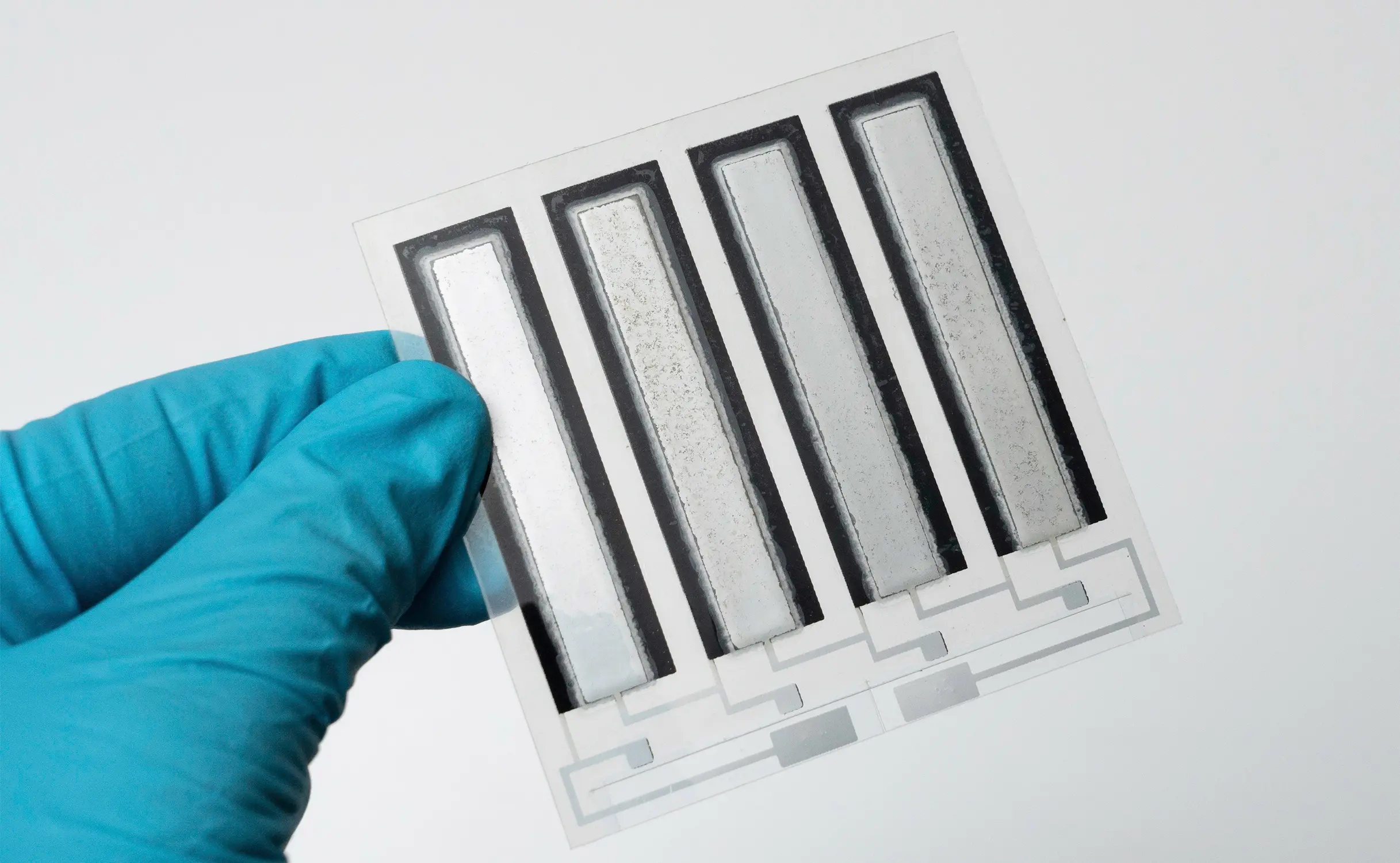
Printed batteries are energy storage devices fabricated using various printing technologies. The process typically involves dispensing conductive inks, electrolyte paste, and separator material onto thin, lightweight substrates.
In flexible electronics, printed batteries serve a critical role because of their ability to integrate seamlessly into designs with flexible forms and shapes. This adaptability allows customization based on specific material and energy requirements.

APPLICABLE INDUSTRIES
- Consumer electronics
- Medical equipment
- Automotive
- Aerospace
COMMON MATERIALS
- Current collector: Stainless steel, silver, carbon, aluminum, copper, nickel, gold
- Anode: Zinc, silver, carbon, lithium, nickel
- Electrolyte: BMIMTf/PVDF–HFP/ZnTf, H2O/KOH/ZnO, EC:DMC/LiPF6
- Cathode: MnO2, silver, LiCoO2, LiFePO4
COMMON SUBSTRATES
- Polyethylene terephthalate (PET)
- Polyethylene naphthalate (PEN)
- Polyamide (PI)
- Nylon
- Paper
- Fabric
INDUSTRY
INDUSTRY
FUTURE OUTLOOK
FAST FACTS
Frequently asked questions
Printed batteries can be fabricated using additive printing processes such as direct ink writing and inkjet printing. These techniques deposit functional inks containing battery materials (cathode, anode, electrolyte, and insulator) onto a substrate.
Conventional batteries use a multi-step assembly process and are typically housed in rigid metal casings. Printed batteries offer more flexibility in form factor, are thinner and lighter, and can be more cost-effective to produce at scale for certain energy storage applications.
The lifespan of printed batteries can vary. They may have a shorter life than conventional batteries. However, specific technologies are being developed to improve cycling stability and long-term performance, with some reaching over 500 cycles with good capacity retention.
Printed batteries can be fabricated using additive printing processes such as direct ink writing and inkjet printing. These techniques deposit functional inks containing battery materials (cathode, anode, electrolyte, and insulator) onto a substrate.
The lifespan of printed batteries can vary. They may have a shorter life than conventional batteries. However, specific technologies are being developed to improve cycling stability and long-term performance, with some reaching over 500 cycles with good capacity retention.
Conventional batteries use a multi-step assembly process and are typically housed in rigid metal casings. Printed batteries offer more flexibility in form factor, are thinner and lighter, and can be more cost-effective to produce at scale for certain energy storage applications.