NOVA: Printing PEDOT:PSS Electrodes for Safer Bioelectronics
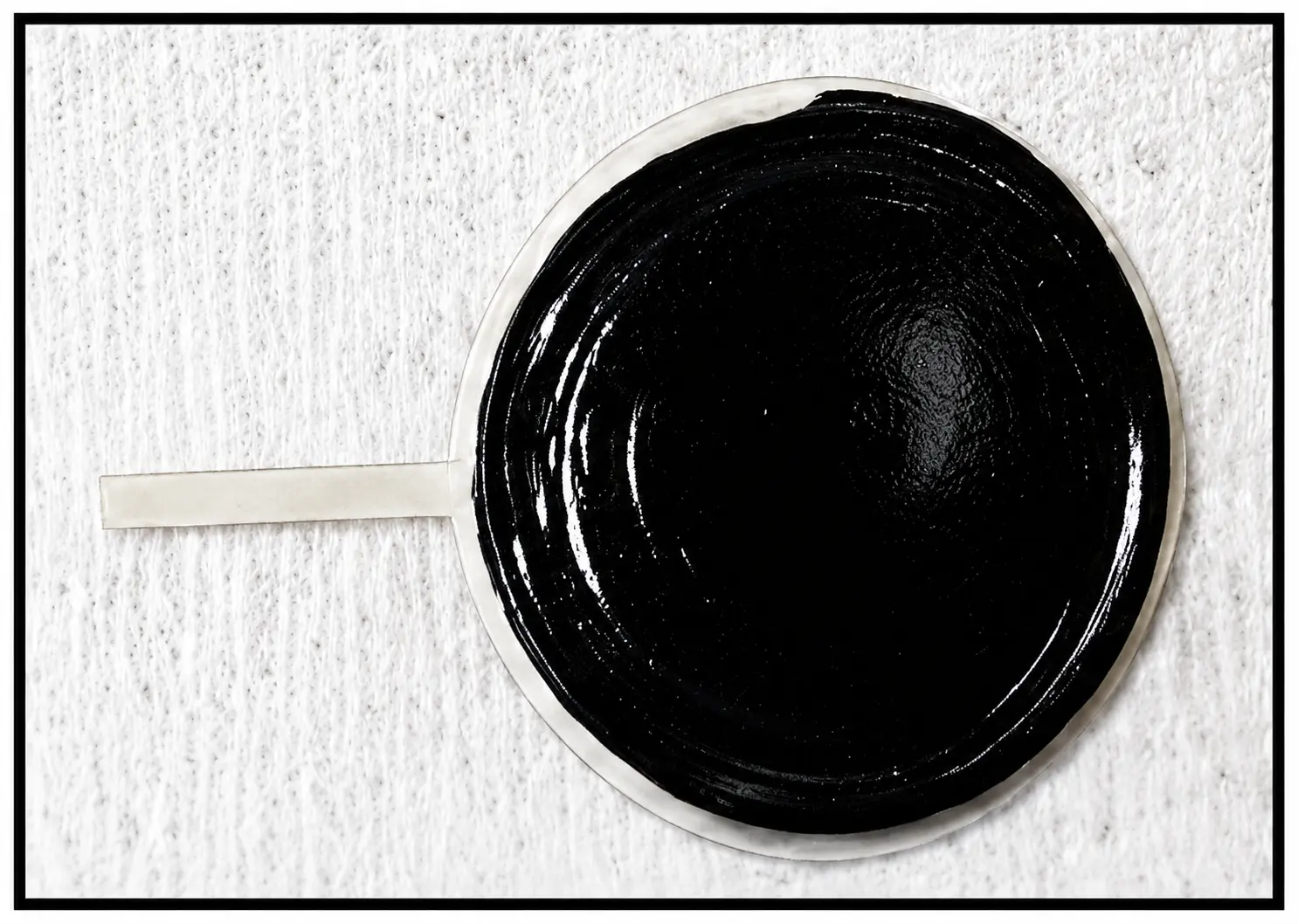
NOVA: Printing PEDOT:PSS Electrodes for Safer Bioelectronics
- By: Shuxuan Jiang
- Published: August 28, 2026 |
Modified: August 28, 2026 - Estimated read time: 2 minutes
- By: Shuxuan Jiang
- Published: August 28, 2026 |
Modified: August 28, 2026 - Estimated read time: 2 minutes
Ever wonder what actually happens inside a medical device the instant it delivers an electrical pulse? For therapies like electroporation, which uses short, powerful zaps to temporarily open cell membranes for drug delivery or gene therapy, that instant matters a lot. Push the voltage too far and the electrode itself can start damaging the very tissue it's meant to treat.
Researchers at Polytechnique Montréal, one of our customers based in Quebec, Canada, recently published a study [1] that finally puts hard numbers on how much voltage a popular bioelectronic material can take before it starts to fail, and builds a repeatable method for testing it.
Developing a voltage stability test for PEDOT:PSS
PEDOT:PSS is something of a celebrity in bioelectronics: a conducting polymer that plays nicely with living tissue while carrying both ionic and electronic charge. It shows up in wearable sensors, neural electrodes, and increasingly, electroporation devices as a gentler alternative to metal electrodes, which are prone to gassing, overheating, and shedding metal ions under high fields. The problem was that nobody had systematically tested where PEDOT:PSS itself starts to break down under those same high-voltage conditions — so the team set out to define its real operating limits.
How it works
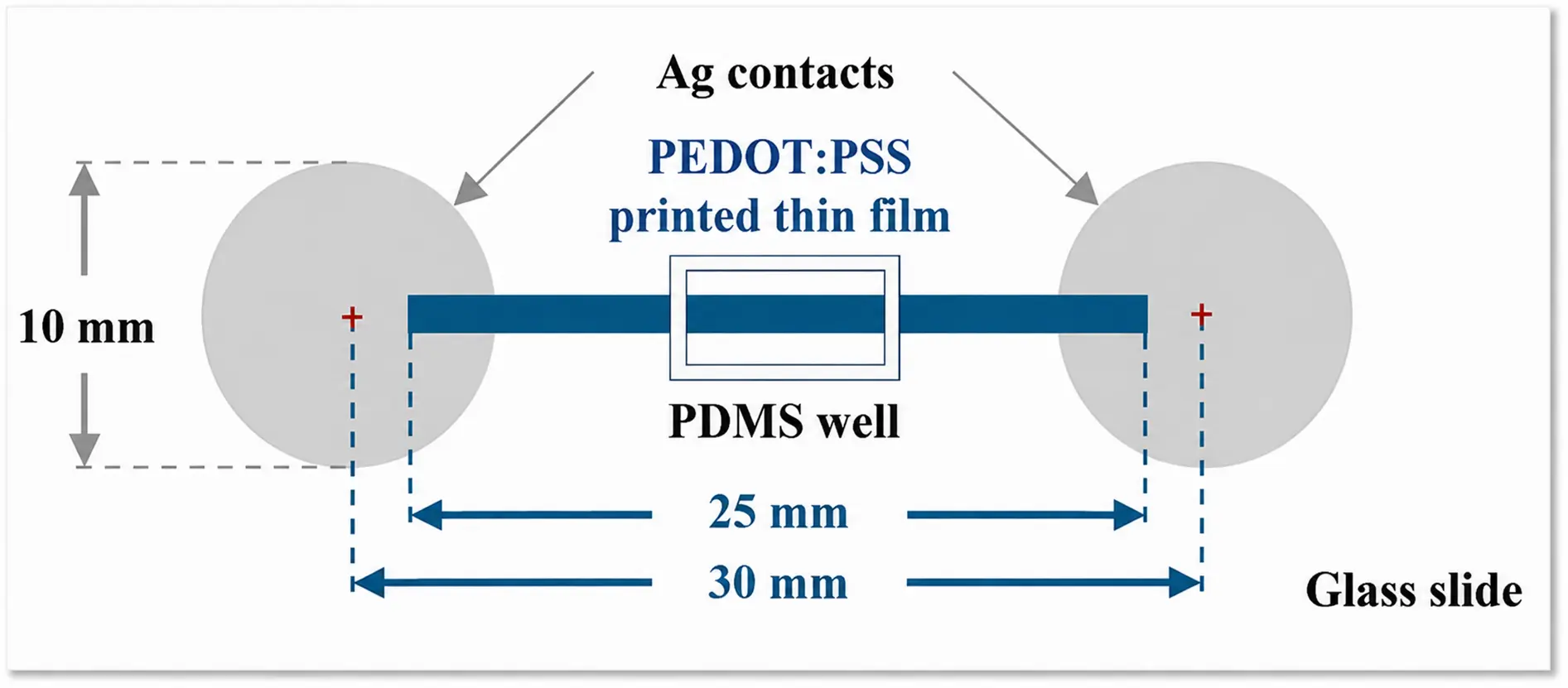
The team printed thin PEDOT:PSS films between two silver contacts on glass slides, then subject them to three kinds of electrical stress tests — steady voltage, voltage sweeps, and rapid pulses as short as 1 millisecond — across three environments: dry air, a saline solution mimicking body fluid, and a water-free ionic liquid. Comparing how the current behaved in each condition let them separate genuine material failure from harmless, short-lived fluctuations.
Fabrication process
Both the silver contacts and the PEDOT:PSS films were printed with the NOVA materials dispensing system, which let the researchers pattern each layer directly onto glass without relying on lithography, keeping film thickness remarkably consistent (2.39 ± 0.26 µm across ten samples) and avoiding the metal-polymer interface issues that complicate other test setups.
Results
The films held steady up to 40 V in dry air, but that ceiling dropped sharply once an electrolyte was introduced, down to about 1.2 V in saline and 5 V in the ionic liquid. Pulse length mattered too: pulses shorter than 10 milliseconds triggered far less degradation than sustained voltage, even near the same failure thresholds. In short, both the surrounding environment and the timing of the pulse determine how much voltage PEDOT:PSS can actually survive.
Conclusion
The study gives bioelectronic device designers real, tested guardrails for building safer PEDOT:PSS electrodes, and establishes a standardized testing method other labs can adopt for comparing conducting polymers going forward.
Want to see more bioelectronics applications like this? Check out the following resources:
- Video: Printing Stretchable Bioelectronics with V-One and NOVA
- White paper: Printing ECG Electrodes with Biocompatible Gold Ink on TPU
- Blog: AI-Powered Ingestible Sensor for Monitoring Gut Health
Ready to talk about how NOVA can help you prototype bioelectronics with your own material? Book a meeting to speak with one of our technical representatives.
References
[1] Dongnang, K., Mawe Noussi, C., Fan, J., Saygin, G. D., & Cicoira, F. (2026). Towards standardized high-voltage testing of printed conducting polymer electrodes: influence of electrolyte environment and pulse duration. Nano Futures, 10, 035002. https://doi.org/10.1088/2399-1984/ae8f94.
Check out our customer stories
Take a closer look at what our customers are doing in the industry.