Webinar Recap: Printing Electronics with Next-Generation Conductive Inks
Webinar Recap: Printing Electronics with Next-Generation Conductive Inks
- By: Shuxuan Jiang
- Published: January 29, 2026 |
Modified: March 26, 2026 - Estimated read time: 4 minutes
- By: Shuxuan Jiang
- Published: January 29, 2026 |
Modified: March 26, 2026 - Estimated read time: 4 minutes
In this webinar, our Technical Sales Lead, Gio Obando, explored how conductive inks and direct ink writing are expanding what is possible in printed electronics, from flexible circuits to multilayer printed batteries.
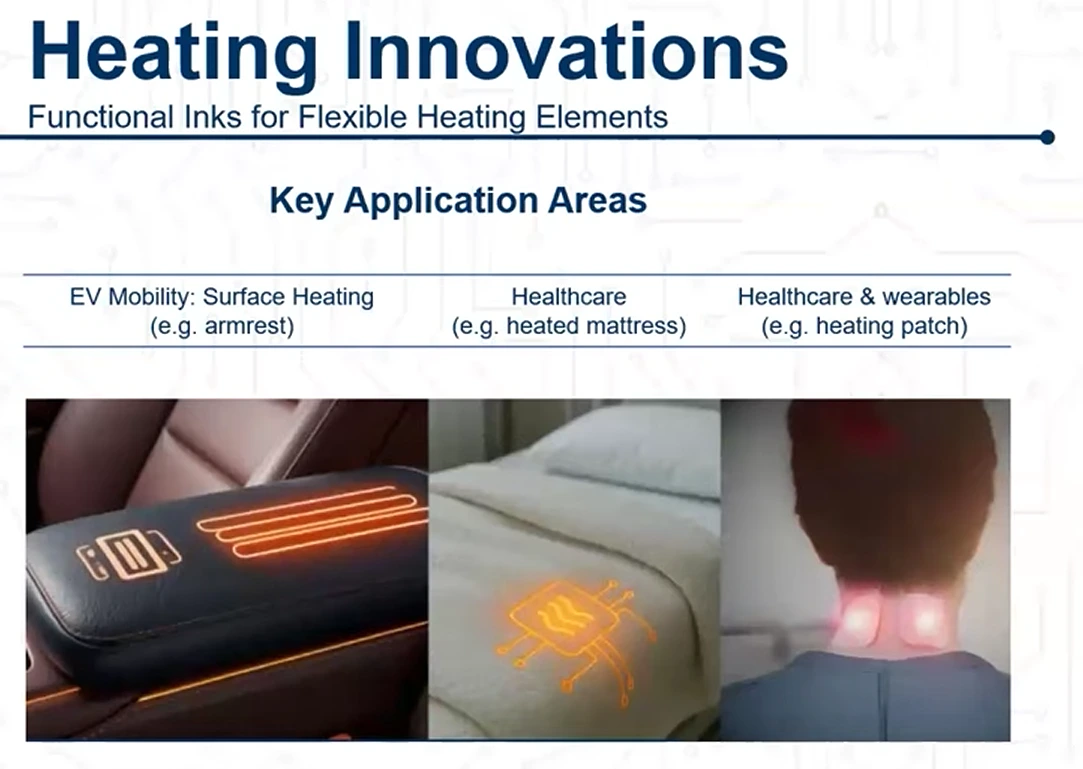
We were joined by Steve Paschky, Managing Director at Saralon, who shared insights into the company’s portfolio of functional inks and ink sets for printed batteries, copper circuits, stretchable electronics, heaters, and sensors. He also highlighted a key industry challenge driving material innovation today: rising silver prices and the growing need for conductive alternatives such as copper inks.
Webinar highlights
Steve Paschky on next-generation conductive materials
Printed electronics continues to open up new possibilities for applications that are flexible, lightweight, and lower waste than conventional PCB-based manufacturing. During the session, Steve introduced Saralon’s approach to functional materials, including battery inks, copper inks, stretchable conductive inks, heating layers, and printed sensor materials. He emphasized that printed electronics is an additive process, meaning material is deposited only where needed, which can reduce waste and enable greater design freedom on substrates such as PET, paper, TPU, and glass.
A major theme in Steve’s walk-through was material innovation. He explained that rising silver prices are increasing interest in alternatives such as copper inks, while also emphasizing the importance of following processing instructions closely to achieve good performance. For teams exploring printed electronics, his message was clear: material performance depends not just on the ink itself, but also on the drying, curing, and handling conditions used during development.
Direct ink writing for printed electronics
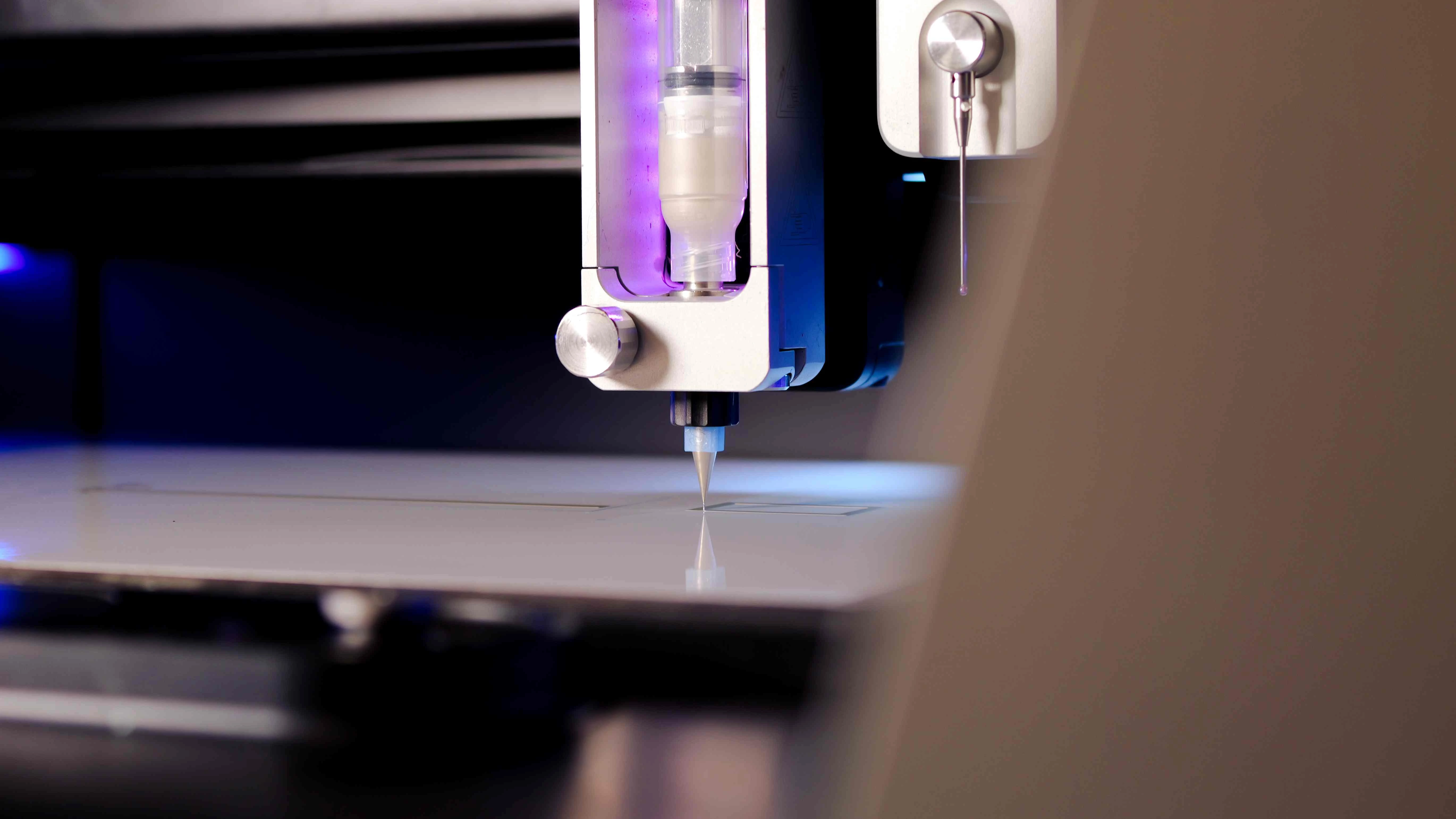
Gio focused on direct ink writing as a practical method for printed electronics prototyping. He described it as a digital, nozzle-based dispensing process for viscous materials that does not require screens, masks, or additional tooling. That makes it especially useful in early R&D, where teams need to move quickly between concept, testing, and design revision. He also noted that the method supports a wide viscosity range and can achieve fine feature sizes depending on nozzle diameter and material properties.
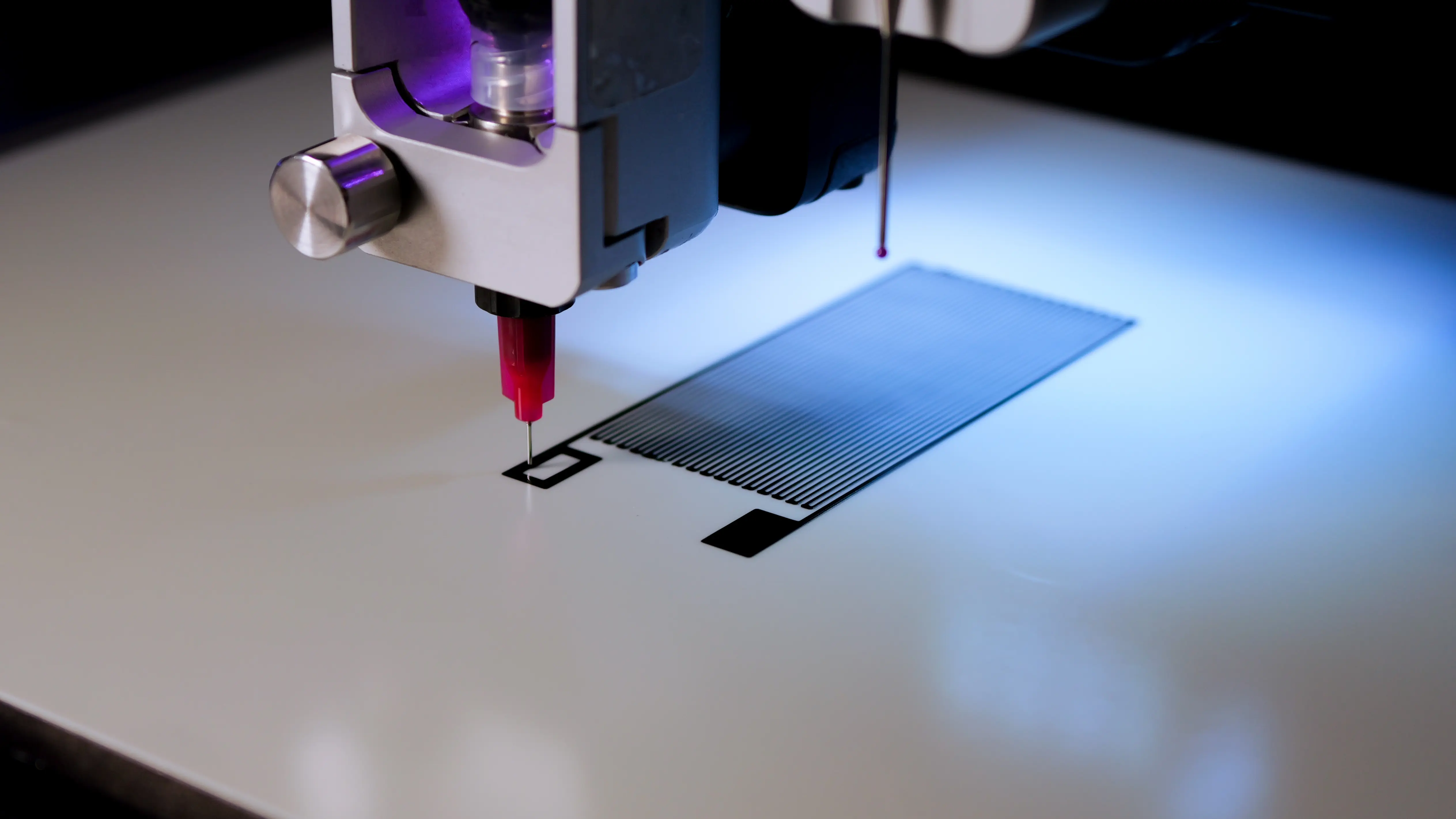
He then walked through why direct ink writing is particularly valuable for flexible electronics development: it enables rapid iteration, works across a broad range of materials and substrates, and reduces waste by dispensing only the material needed. Rather than committing immediately to high-volume processes, teams can use digital dispensing to validate materials, geometries, and process settings earlier in development.
Printed battery case study with NOVA
To show this in practice, Gio shared a printed battery project built by our Applications team on NOVA using Saralon’s battery ink suite. The project used seven materials in a multi-layer structure to create a flexible printed battery. This example illustrates how digital dispensing can support complex, multi-material prototyping without the setup burden associated with screen printing.
Live Q&A
Q: Does copper oxidize over time, increasing resistance?
A: Steve explained that when Saralon’s copper ink is processed according to the drying and curing instructions, resistance increases by only about 2% after two months under typical room conditions. He added that lamination or coating can further protect the printed copper from oxidation.
Q: Can stretchable inks be printed on TPU?
A: Yes. Previous projects confirmed strong results on flat TPU substrates. Steve noted that Saralon’s stretchable silver ink has been tested successfully on TPU-coated textiles, while Gio added that NOVA has also been used to dispense on TPU substrates. One key design consideration is line geometry, since thicker printed lines are more likely to crack under strain.
Q: Are printed inks reliable on rigid boards too?
A: Yes. Although much of the webinar focused on flexible and stretchable applications, Steve noted that Saralon’s inks can also be used on rigid substrates including FR4, paper, wood, and glass, depending on surface conditions and application needs.
Q: What is the biggest takeaway for teams getting started?
A: Follow the data sheets and process instructions closely. Both speakers stressed that successful results depend heavily on using the correct print settings, curing conditions, and layer alignment, especially in multi-material systems like printed batteries.
Additional resources
Want to learn more about conductive inks and their applications? Check out these resources:
- Application overview: Printed Batteries — Powering electronics with flexible printed batteries
- White paper: Printing Silver Conductive Ink on Cotton Fabric
- Customer story: Printing Stretchable Bioelectronics for Research with NOVA
Working with conductive inks? Book a meeting to speak with one of our technical representatives.
Check out our customer stories
Take a closer look at what our customers are doing in the industry.