From Prototype to Production: VFP on Functional Inks
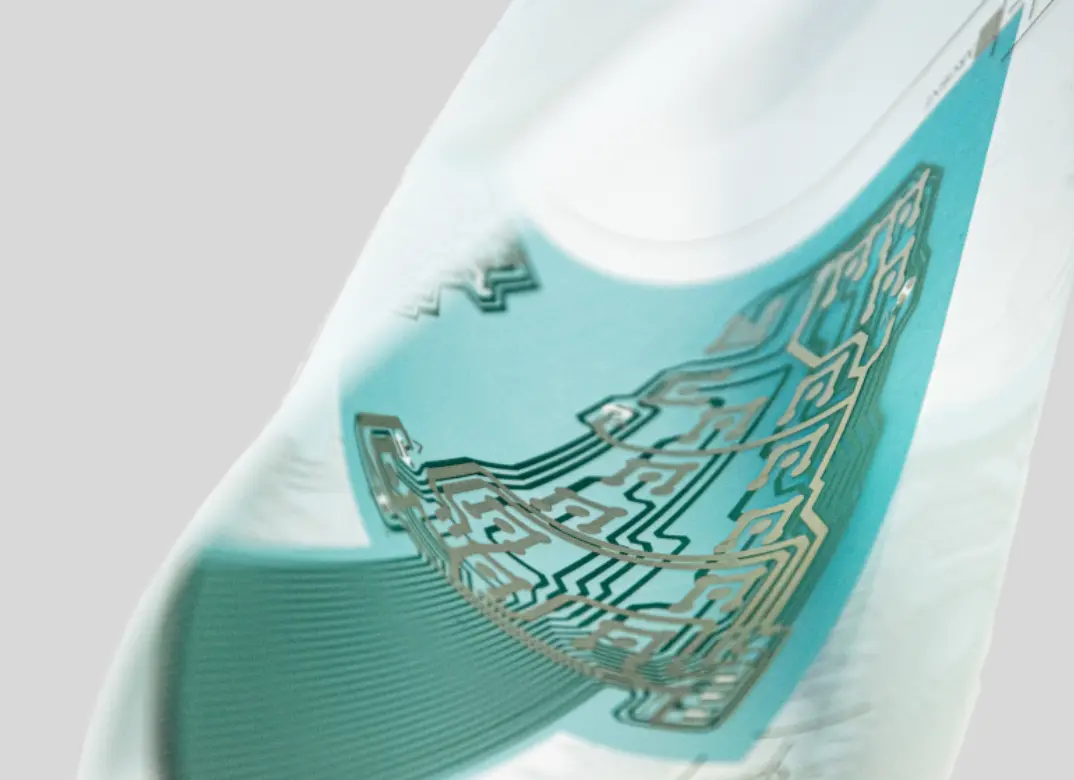
From Prototype to Production: VFP on Functional Inks
- By: The Voltera Team
- Published: January 14, 2026 |
Modified: March 26, 2026 - Estimated read time: 5 minutes
- By: The Voltera Team
- Published: January 14, 2026 |
Modified: March 26, 2026 - Estimated read time: 5 minutes
Flexible hybrid electronics (FHE) continue to reshape how engineers design and manufacture next-generation devices, from flexible sensors and smart labels to wearable electronics and hybrid systems. As the FHE industry continues to evolve, the role of reliable, scalable functional materials becomes more critical than ever.
We recently had a conversation with Bianca Verneuil, Head of Communications & Marketing at VFP Ink Technologies, to discuss VFP’s mission in additive electronics, the capabilities of VFP’s Silver Electron ink, and how developers can move seamlessly from prototyping to mass manufacturing.
VFP Ink Technologies and its mission
Q: Can you briefly introduce VFP and its mission in the field of additive electronics?
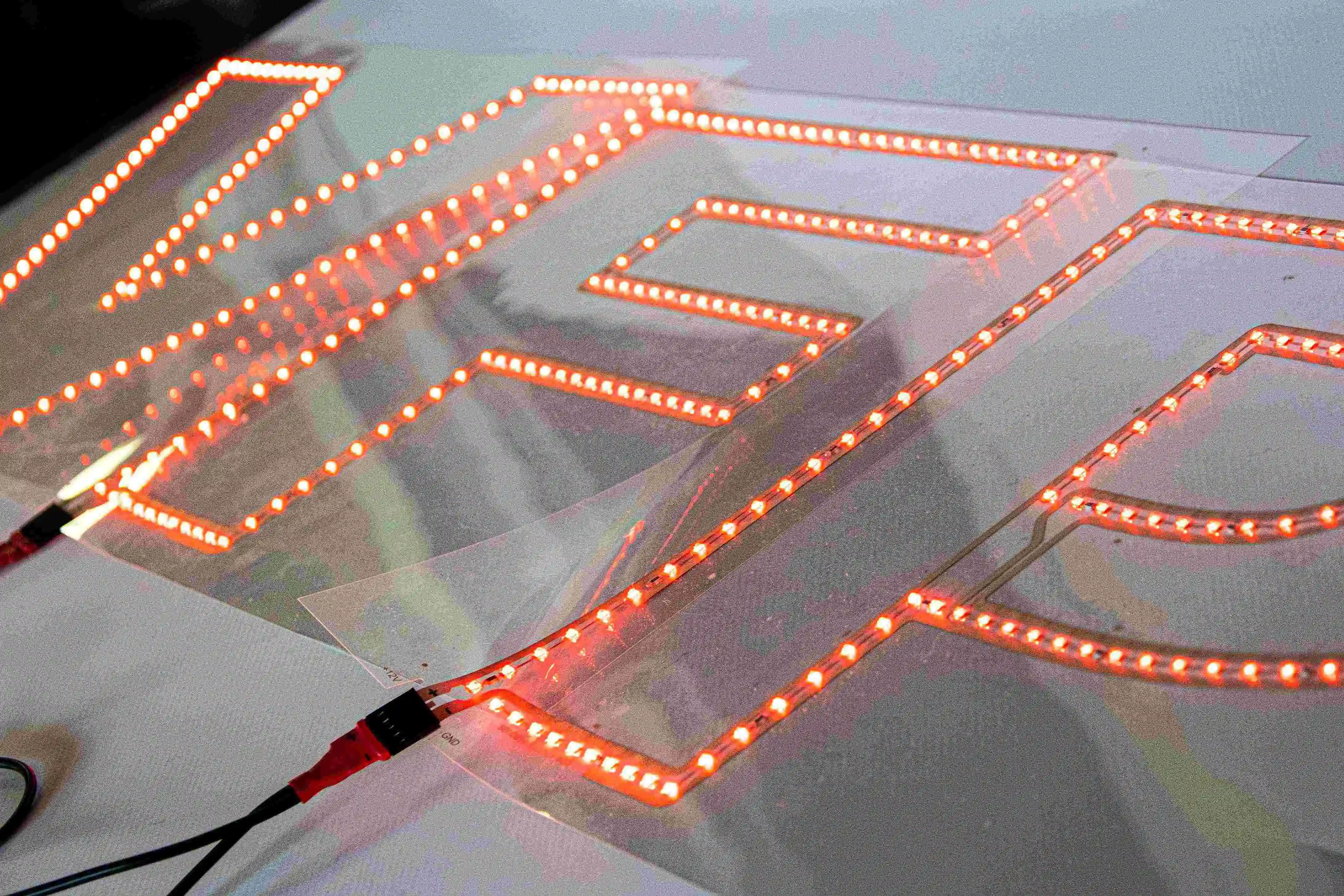
A: VFP Ink Technologies is a French manufacturer specializing in high-performance functional inks for printed and additive electronics. For more than 10 years, our mission has been to provide the industry with reliable, scalable, and application-driven materials that enable new generations of flexible and hybrid electronic devices.
Our expertise covers conductive silver and carbon inks, dielectric varnishes, functional varnishes, and more recently, advanced specialty materials such as piezoelectric inks. We work closely with OEMs, research institutions, and production partners to bridge the gap between laboratory innovation and industrial-grade manufacturing.
At the core of our philosophy is a commitment to process simplification, environmental responsibility, and strong application support, allowing designers and engineers to move from concept to prototype and from prototype to mass manufacturing with confidence.
Benefits of VFP’s Silver Electron ink
Q: What makes VFP’s Silver Electron ink stand out and what are some benefits of using it for flexible electronics prototyping?
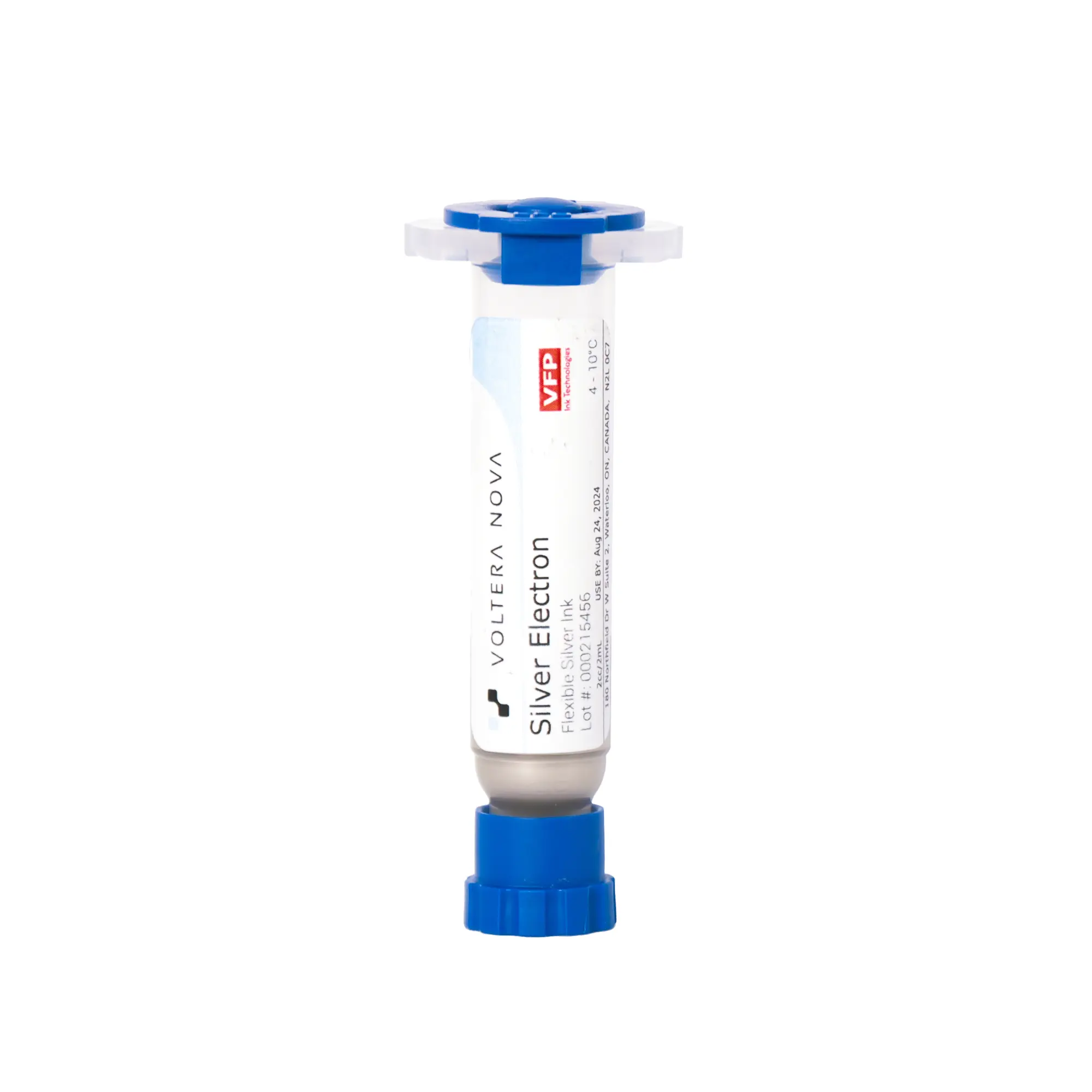
A: VFP’s Silver Electron (SE) ink stands out thanks to its combination of high electrical stability, mechanical flexibility, and broad substrate compatibility. After curing, SE maintains very stable conductive properties over time, offering a resistivity of ≤ 15 mΩ/sq/mil, even after mechanical stress such as a net fold. It also provides excellent adhesion (ISO 2409 Class 0), ensuring reliable performance across demanding applications.
SE ink is designed for versatility. It can be printed on a wide range of substrates for diverse printed electronics use cases. Compatible substrates include:
- Paper and cardboard
- PVC, PET, and polycarbonate
- Treated polyester
- Glass and polyimide
This conductive ink is optimized for automatic, semi-automatic, and manual screen-printing processes, with consistent deposition thickness (8-9 µm at 90 threads/cm) and no dilution required before use. Thanks to its flexibility, stability, and ease of processing, SE offers a dependable and efficient silver conductor suitable for both industrial and specialized applications, while maintaining strong mechanical and chemical durability.
Key prototyping advantages of SE include:
- Low-temperature curing, allowing quick proof-of-concept production without damaging flexible substrates
- Excellent flexibility and mechanical stability, enabling the rapid creation of foldable, bendable, or wearable circuits
- Stable adhesion and chemical resistance, essential for multi-step experiments or complex assemblies
- Clean printability, ensuring consistent geometries even with small prototypes.
- Non-CMR (carcinogenic, mutagenic, reprotoxic), aligning with sustainability goals for development programs
These characteristics make the ink suitable for prototyping sensors, interconnects, flexible circuits, smart labels, and low-power embedded modules.
Scaling from prototyping to production with VFP’s Silver Electron ink
Q: How does VFP address compatibility between the Silver Electron ink and direct ink writing and screen printing?
A: The ink was designed with cross-process compatibility in mind from the start. Its rheology supports:
- Direct ink writing (DIW) for rapid prototyping, small-batch production, and custom geometries
- Screen printing for thicker layers, uniform deposition, and scalable industrial production
Our R&D teams carefully optimized solids content, viscosity, and drying behavior to ensure clean line definition and stable conductivity across both processes.
- For DIW, the ink maintains consistent flow and good extrudability.
- For screen printing, it performs reliably with polyester or stainless-steel meshes between 79 and 120 threads/cm.
This dual compatibility enables designers to prototype quickly with DIW, then transition the exact same ink to industrial screen printing without reformulation.
Q: How well does the ink scale from prototyping to mass manufacturing (screen printing)?
A: The ink scales extremely well because it was originally formulated for industrial screen printing, then optimized for DIW. Its stable drying, low-temperature cure, reproducible viscosity, and adhesion profile all make it compatible with automated screen-printing lines. Manufacturers can move from bench-top DIW prototypes, such as those made using NOVA, to high-throughput production, using the same ink and achieving consistent electrical and mechanical performance. This fluid transition reduces development time and eliminates reformulation risk.
Additional resources
If you’d like to learn more about VFP Ink Technologies’ printed electronics portfolio, request samples, or get technical support, you can reach out directly:
- 📩 Email: lgiacomini@vfp-ink.com, Product Manager for Printed Electronics Inks, VFP Ink Technologies
- 🌐 Website: www.vfp-ink-technologies.com
- 💬 Technical support: Available through VFP’s product managers and sales teams across Europe, the Americas, and Asia
If you’d like to discuss how to prototype with functional materials like the Silver Electron ink using our NOVA materials dispensing system, book a meeting to speak with one of our technical representatives.
Check out our customer stories
Take a closer look at what our customers are doing in the industry.