Flexible Printed Battery Materials: Saralon Insights
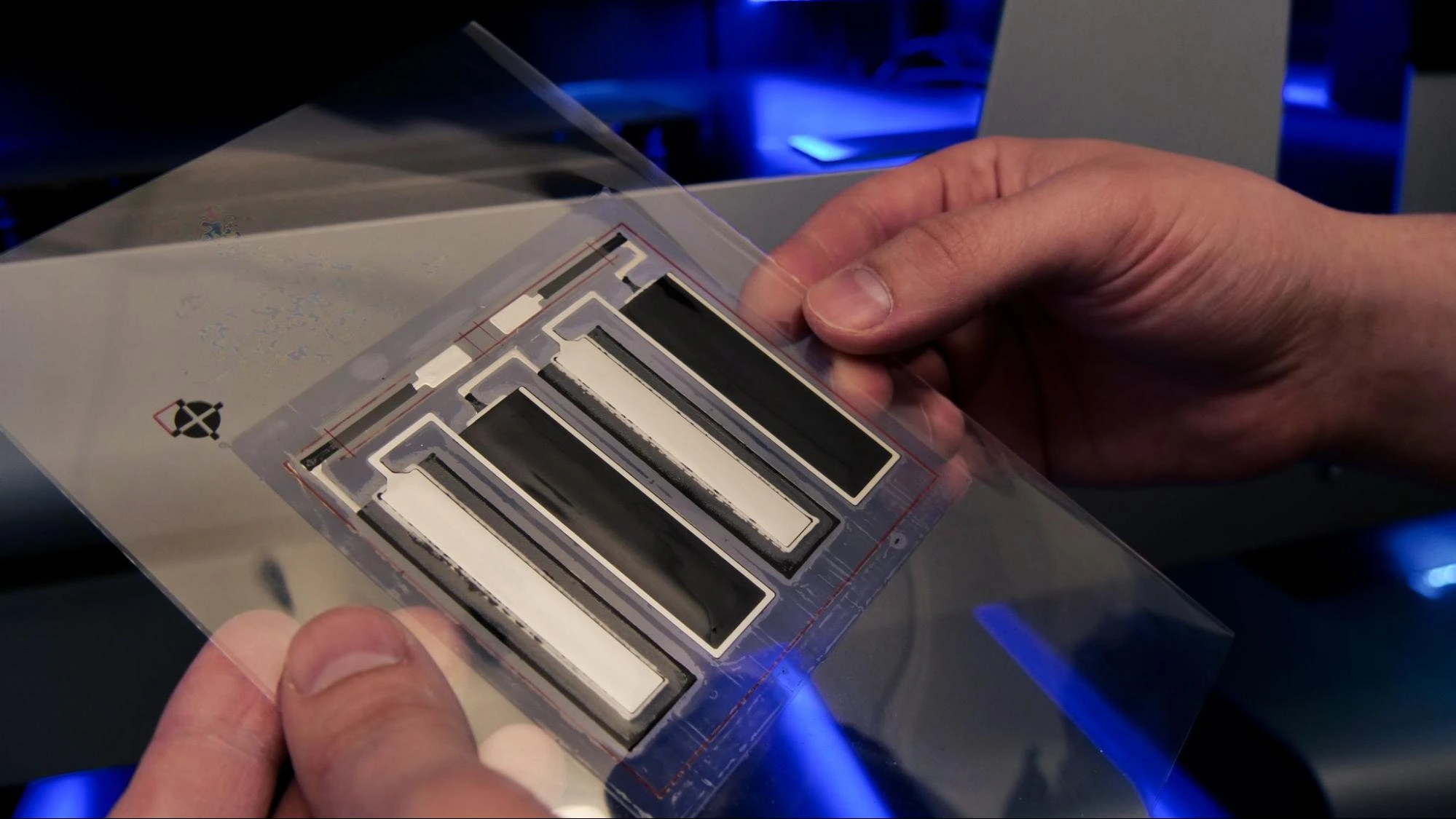
Printed batteries are one of the key applications of additive electronics. With NOVA, a materials dispensing system for additive electronics, we printed a seven-layer flexible battery using Saralon’s SaralBattery Inks. In a recent conversation with Steve Paschky, Managing Director at Saralon, we discussed Saralon’s mission, its ink technologies, and how developers can prototype flexible batteries using SaralBattery Inks.
About Saralon and its ink offerings
Q: Tell us about Saralon and its mission in the field of additive electronics?
A: Saralon is dedicated to transforming printing companies into electronic manufacturers. Although printed electronics have been known in the scientific community for the last two decades, only a handful of products have reached the market. In other words, we are still scratching the surface of this emerging technology.
The market potential is enormous, with the ability to impact virtually every aspect of daily life. But to unlock that potential, traditional color-printing companies must be involved. These companies already operate millions of sophisticated, high-speed printing machines around the world — machines that, with the right inks and process know-how, are capable of producing printed electronics.
Sarlon has accepted this challenge: to localize electronics production by enabling printing companies to manufacture sustainable electronic devices for local demand. The company develops compatible, easy-to-process Saral Inks© for screen printing, and has expanded into flexo printing as well as dispensing and inkjet technologies to broaden what’s possible in printed electronics.
Benefits of Saralon’s SaralBattery Inks
Q: What makes Saralon’s battery ink suite unique and what are the benefits of using it to prototype flexible batteries?
A: Saralon has developed a new generation of battery ink technology to print Zinc-ZnCl2-MnO2 batteries. This solution addresses not only the concerns of sustainability and cost but also the desire to customize printed battery size, shape, and power specifications in-house.
SaralBattery Inks are a fully-printable set of compatible functional inks (seven Saral Inks©) for prototyping and manufacturing Zinc-ZnCl2-MnO2 batteries on lightweight flexible substrates. They allow printed electronics application developers to customize their printed battery size, shape, and power specifications based on the end-user requirements by changing the size and thickness of the layers or printing them in series.
Other features include:
- Open circuit voltage of 1.5 V (unit cell)
- Energy density of 0.5-1 mAh/cm2 (active area)
The inks are also compatible with environmentally friendly substrates such as biodegradable paper and recyclable blister foil — an advantage for applications where sustainable, customizable power sources have historically been difficult to achieve, such as wearables, traceable parcels, smart packaging, and other IoT devices.
Q: How well does Saralon’s battery ink suite scale from prototyping to mass manufacturing?
A: The SaralBattery Inks are fully printable not only on lab scale but also on fully automatic screen printing lines. As the ink suite is compatible with both screen printers and materials dispensing systems, it is suitable for:
- University and research institutions
- R&D departments for IoT device development
- Large-scale production of flexible printed batteries
- Integration of power source into market-ready IoT devices
Printed battery applications using SaralBattery Inks
Q: Can you share any interesting prototyping projects that have used the Saralon battery ink suite?
A: SaralBattery Inks have been used across multiple high-value smart markets to produce sustainable power sources for IoT applications.
Temperature logger
The cold-chain ecosystem involves many stakeholders, making accurate, continuous temperature records essential for accountability and consumer trust. Thin, flexible, and sustainable temperature loggers remove human error and improve data accuracy by recording temperature at set intervals throughout the shipping process.
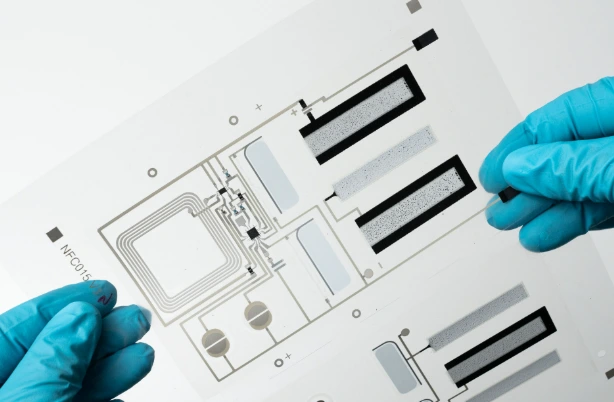
This project used SaralBattery Inks for printing the entire circuit in-house, integrating:
- A built-in power source
- A display
- A near field communication (NFC) antenna
Wearable sensor (Biomarker)
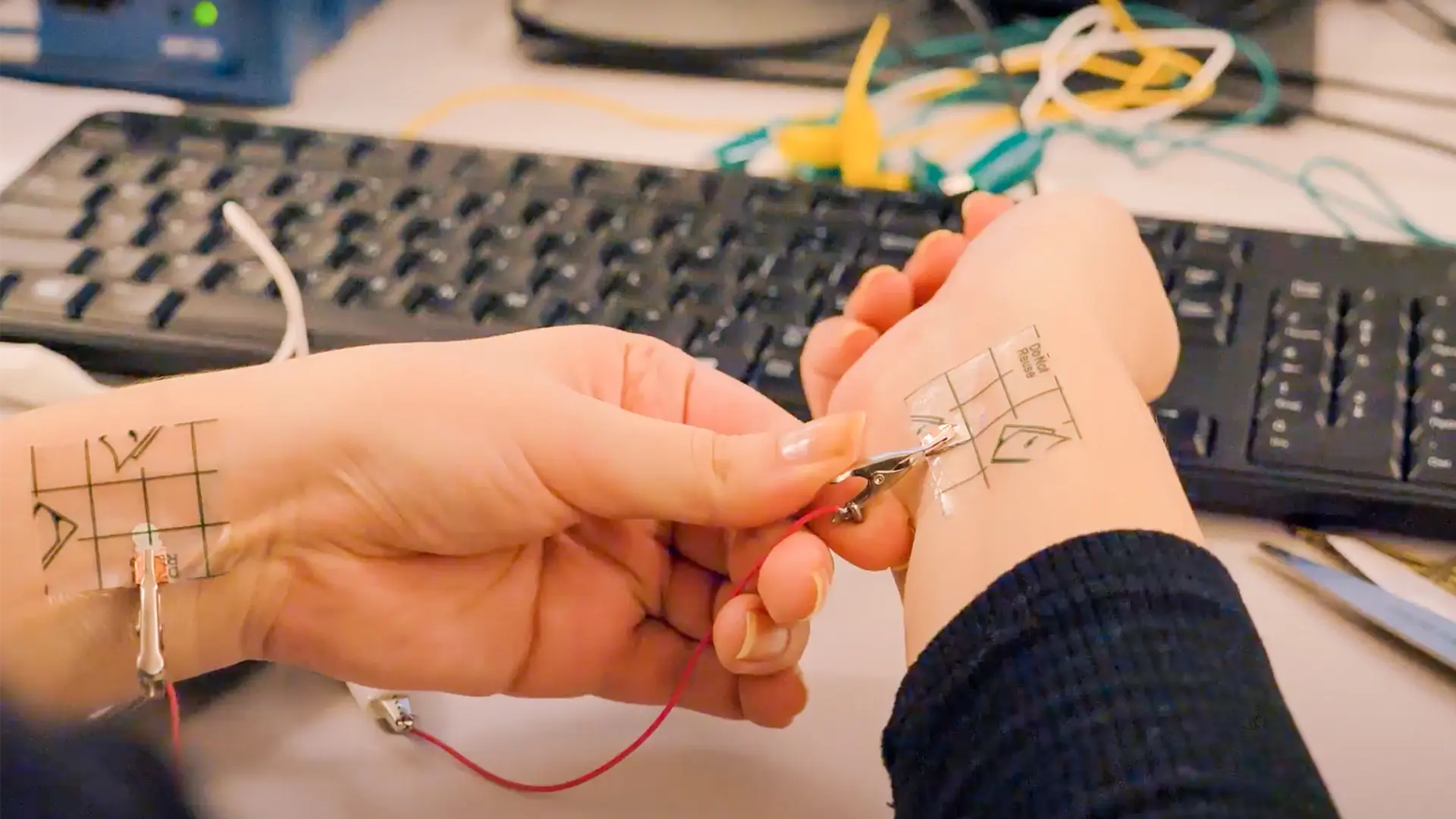
ELSAH is a five-year smart-patch project that aims to develop an integrated wearable sensor system, the ELSAH-patch, designed for continuous monitoring of molecular biomarker concentrations.
SaralBattery Inks were used to print a battery that enables the patch’s self-sustained operation, including independent measurements and secure wireless transmission of data to a user’s mobile phone.
Additional resources
If you’d like to learn more about Saralon’s products or request samples or technical support, you can reach them at inks@saralon.com or visit their website, where you’ll find detailed information about their functional Saral Inks© and additional innovations, including:
- Stretchable printed electronics
- Low-cost mass manufacturing through copper ink
- Fully printable non-flammable batteries
- Flexible (ultra-thin) light emitting OLED Labels
Interested in using NOVA for similar printed battery applications? Book a meeting to speak with one of our technical representatives.

Check out our Customer Stories
Take a closer look at what our customers are doing in the industry.